
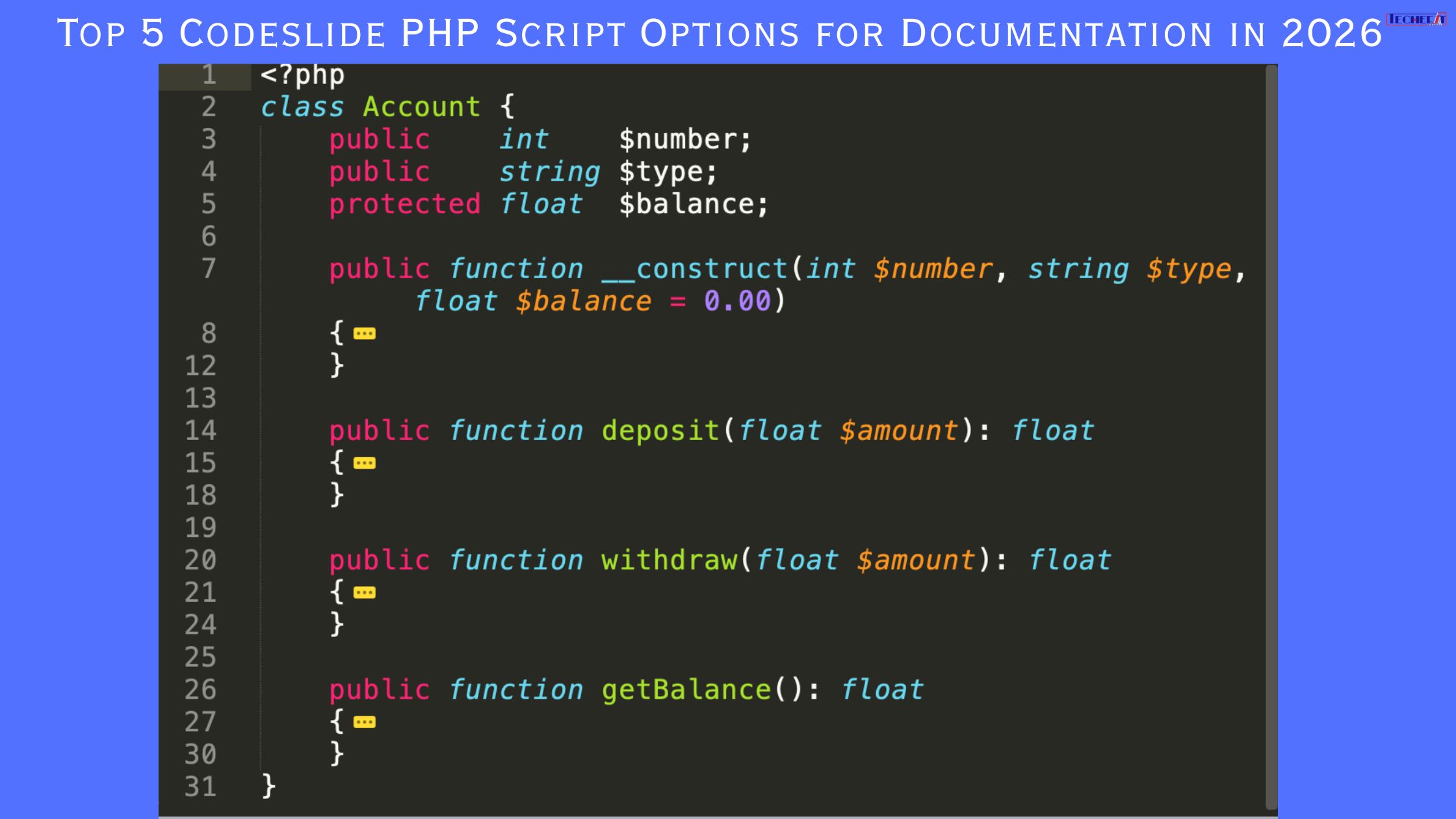
In the rapidly evolving landscape of 2026, the way developers consume documentation has changed. Static, wall-of-text manuals are a relic of the past. Today’s developers demand interactive, high-performance, and visually appealing ways to explore the codebase. This is where the CodeSlide PHP script comes into play.
A CodeSlide script is a special PHP-powered tool or component designed to present code snippets in a “slideable” or tabbed format. This allows users to toggle between different versions of a script (for example, PHP 7 vs. PHP 8.4), compare different languages (PHP vs. Python), or step through logic flow without leaving the page.
If you’re creating a documentation portal, a technical blog, or a developer portfolio this year, here are the top 5 CodeSlide PHP script alternatives to elevate your content.
1. Laravel DocStream (The Professional Choice)
As Laravel continues to dominate the PHP ecosystem in 2026, DocStream has emerged as the gold standard for high-level documentation. This is not just a simple script; It is a robust package that integrates seamlessly into modern Laravel applications.
- Key feature: Native support for “stage sliding”, which allows users to see the evolution of a code block across multiple Git commits.
- Why it’s a top pick: It takes advantage of Blade components, making it incredibly easy to customize the theme. It also includes built-in AI summaries that explain in plain English what the code “slide” is doing.
- Best for: Enterprise-level API documentation and SaaS platforms.
2. PrismSlide PHP (The Lightweight King)
For those who want the power of the industry-standard Prism.js highlighter but need a server-side PHP backend to manage large libraries of snippets, PrismSlide is the answer.
- Key feature: A “zero-JS” fallback. While it uses JavaScript for the sliding animations, the PHP script pre-renders the code block, ensuring that even users with disabled scripts (or search engine crawlers) can see the code.
- Why it’s a top pick: It’s incredibly lightweight. In an age where web vitals and pagespeed scores are important for SEO, PrismSlide adds almost zero latency to your document pages.
- Best for: Technical blogs and light documentation sites.
3. DevShowcase Pro (The Portfolio Powerhouse)
If your goal is to showcase your work to potential clients or employers, DevShowcase Pro is a premium PHP script specifically designed for presentations.
- Main feature: “Interactive execution.” This script doesn’t just show code; It includes a secure sandbox where users can click the “Run” button to view the PHP output in a sliding panel right next to the source.
- Why it’s a top pick: It supports over 50 syntax themes and includes the “Copy to Clipboard” feature that is essential for developer UX. It also tracks “slide engagement,” which shows you which parts of your document users find most interesting.
- Best for: Freelance portfolios and educational tutorials.
4. Markdown-to-Slide (The Workflow Optimizer)
Many developers prefer to write in Markdown rather than raw HTML. Markdown-to-Slides is a PHP utility that parses your .md files and automatically converts fenced code blocks into interactive slides.
- Key Feature: Automatic tab generation. If your Markdown file contains two code blocks next to each other, the script intelligently merges them into a single sliding component with tabs labeled by language or version.
- Why it’s the top pick: It automates the most difficult part of documentation. You write the code, and the script handles the UI.
- Best for: Open-source maintainers and “docs-as-code” workflows.
5. CodexSlide (The Open-Source Community Favorite)
For those who believe in the power of community, CodexSlide is a free, open-source PHP script that has seen massive updates in early 2026.
- Key Feature: Cross-platform sync. If a user is viewing your documents on their phone, they can “slide” through code snippets using touch gestures. The PHP backend makes sure the state is saved, so if they refresh the page on their desktop, they are right where they left off.
- Why it’s a top pick: It’s highly expandable. Being open-source, there is a huge library of community-contributed “skins” and plugins for things like Mermaid.js integration (for flowcharts).
- Best for: Community-driven projects and amateur developers.
Why You Need a Codeslide Script in 2026
Documentation is no longer just a “help file”—it’s a part of your brand’s user experience. Using CodeSlide PHP scripts provides three distinct benefits:
- Reduction in cognitive load: By hiding complex or alternative code versions behind a slide/tab, you don’t overwhelm the reader with a “wall of code”.
- Increased retention: Interactive elements keep users on the page longer, which is a positive sign for both education and SEO.
- Mobile Accessibility: In 2026, more developers than ever are browsing documents on tablets and foldables. A sliding interface is more natural for touch-based navigation than long scrolling.
Implementation Checklist
When choosing your script, make sure it checks these three boxes:
- Syntax Highlighting: Does it support the latest PHP 8.4+ syntax?
- Responsive design: Do code slides scale properly on mobile devices?
- Accessibility (A11Y): Can a user navigate the “slides” using only the keyboard?
How to Get Started
Most of these scripts can be installed via Composer, the PHP dependency manager. For example, to install a community favorite like CodexSlide, you would typically run:
Bash
Composer require codex/codeslide-php.
From there, you simply wrap your code in the provided PHP classes or helper functions to render the interactive UI.