
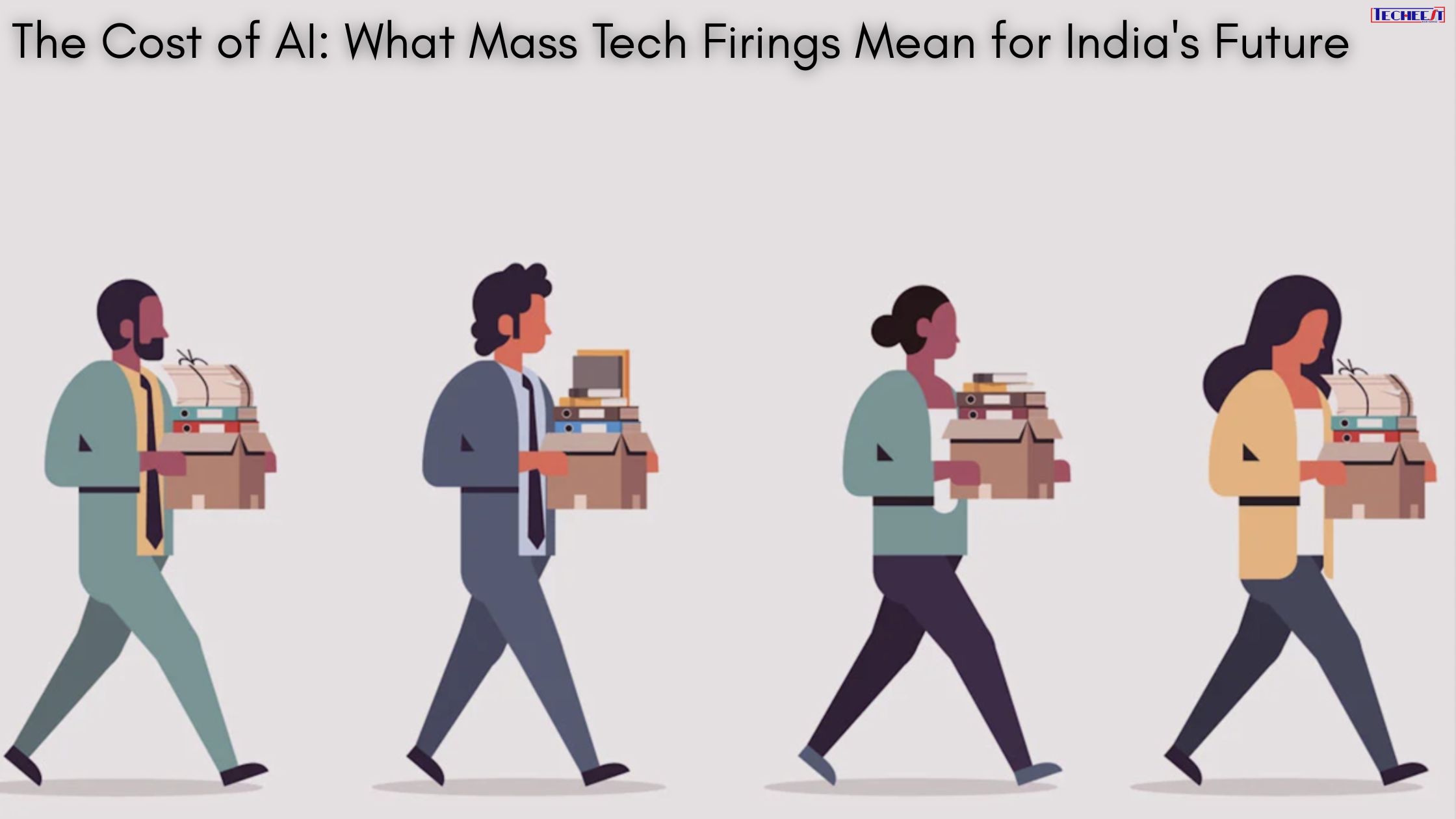
As we end 2025, the dust is far from settling in the global technology sector. While the year started with high hopes for an AI-led economic “super-cycle,” it is ending with a sobering reality check. From Silicon Valley to the tech corridors of Bengaluru and Hyderabad, 2025 is defined by a sustained wave of workforce “reforms”.
Globally, tech giants such as Intel, Microsoft, and Amazon have shed thousands of jobs. However, its impact in India is particularly poignant. For decades, the Indian IT services sector has been the dream base of the country’s middle class and the primary engine of urban consumption. But with the rise of agentic AI and automated service models, the definition of a “tech job” is being rewritten – often with a pink slip in hand.
What do these mass shootings mean for the future of India? Is this a temporary glitch in the system, or the beginning of a structural collapse of the traditional outsourcing model?
The 2025 “Silent Layoff” Epidemic
While headlines often focus on the huge numbers announced by US-based Big Tech, the situation in India has been more dire. Apart from direct dismissals, such as Tata Consultancy Services (TCS) announcing layoffs of nearly 20,000 employees (its biggest ever cut), the trend of “silent layoffs” has taken hold.
Estimates suggest that more than 50,000 tech professionals in India were asked to “quietly resign” or find other roles by the end of 2025. Unlike the post-pandemic reforms of 2023, these are not simply responses to excessive hiring. These are strategic pivots towards an AI-first delivery model.
Key statistics: In 2025, about 25% of all global tech layoffs were explicitly linked to AI-driven restructuring. In India, this has hit hardest mid- to senior-level talent, who have legacy skills but lack AI proficiency.
Why the “Service Model” is Breaking
For thirty years, India’s IT success was based on “intermediation” – the ability to provide high-quality human labor at a lower cost than the West. But AI has introduced a new kind of mediation: software versus human.
- Death of Level-1 Support: Routine tasks like quality assurance (QA), basic coding, and Level-1 technical support are now being handled by autonomous AI agents. For an Indian IT firm, the cost of an AI agent is a fraction of a junior developer’s salary, and it operates 24/7 without “bench” costs.
- The Agentic Shift: 2025 was the year of “agentic AI” – systems that not only answer questions but actually execute workflows. This has reduced the need for “armies of engineers” that were once required for large-scale maintenance projects.
- Customers demand efficiency: Global customers are no longer demanding 500 developers to maintain systems from Indian companies; They are seeking 5 developers and an AI-integrated platform.
The Economic Domino Effect: Beyond the Office
The “cost of AI” is not only felt by individuals who are losing their jobs; It affects the entire Indian economy. The IT sector contributes about 7.5% of India’s GDP, and its employees are the primary drivers of consumption in top urban centres.
- Real estate stagnation: Cities like Bengaluru and Pune have witnessed a cooldown in the luxury residential market. With “job-hugging” (employees remaining in roles out of fear) becoming the norm, demand for new home loans has slowed.
- Consumption squeeze: IT workers are important consumers of retail, automobiles and luxury services. The slowdown in IT salaries – which grew only 5% in FY2015 compared to an average of 15% in previous years – is a direct threat to India’s consumption-driven growth model.
- The “Family” Myth: 2025 effectively debunks the “corporate family” narrative. The realization that even legacy companies will cut their workforce by 2% to protect AI investment margins has led to a fundamental change in the employer-employee social contract.
The Silver Lining: The $500 Billion Opportunity
Is it all doom and gloom? not necessarily. While traditional roles are shrinking, a new “expertise-scale” model is emerging. According to NASSCOM, India’s AI talent base is projected to double to 12.5 lakh professionals by 2027.
These layoffs are less due to a lack of work and more due to a skill mismatch. The industry is currently in the “split” phase:
- Declining roles: manual testing, legacy system maintenance, basic data entry, and middle-management “layers.”
- Explosive roles: AI ethicists, MLOps engineers, AI product managers, and cybersecurity analysts with AI expertise.
Initiatives like the Government of India’s IndiaAI Mission and FutureSkills PRIME are racing to bridge this gap. By the end of 2025, more than 18 lakh candidates have signed up for AI reskilling, suggesting the workforce is ready to adapt if given the resources.
Strategy for the Future: How to Survive 2026
If you’re a tech professional in India, the message of 2025 is clear: sustainability is a relic of the past; Adaptability is the only currency.
- Move from execution to expertise: If your job can be described as a “series of repeatable steps,” it’s at risk. Choose roles that require strategic decision making, creativity, and ethical judgment – areas where AI still struggles.
- Embrace the “human-in-the-loop”: The most successful professionals in 2026 will not be those who compete with AI, but those who can orchestrate it. Learn how to manage AI agents and audit their output.
- Continuous learning structure: Relying on a university degree or company-directed training sessions is no longer enough. The “learn how to learn” mentality is important. Micro-credentials and stackable certifications in LLM engineering or data sovereignty will be key to staying relevant.
Conclusion: A Painful but Necessary Evolution
The mass technological shootings of 2025 are a painful reminder that the “efficiency” of AI comes at a human cost. For India, this is a moment of reckoning. We can no longer rely on being the “back office of the world” based solely on the number of employees.
India’s future depends on its ability to transform from a labour-intensive service provider to an innovation-driven technology leader. The “cost of AI” is high today, but if the country moves forward successfully, it could secure its place as a global hub of responsible, elite AI talent for the next century.
2026 won’t be about who has the most employees – it will be about who has the most leverage.